
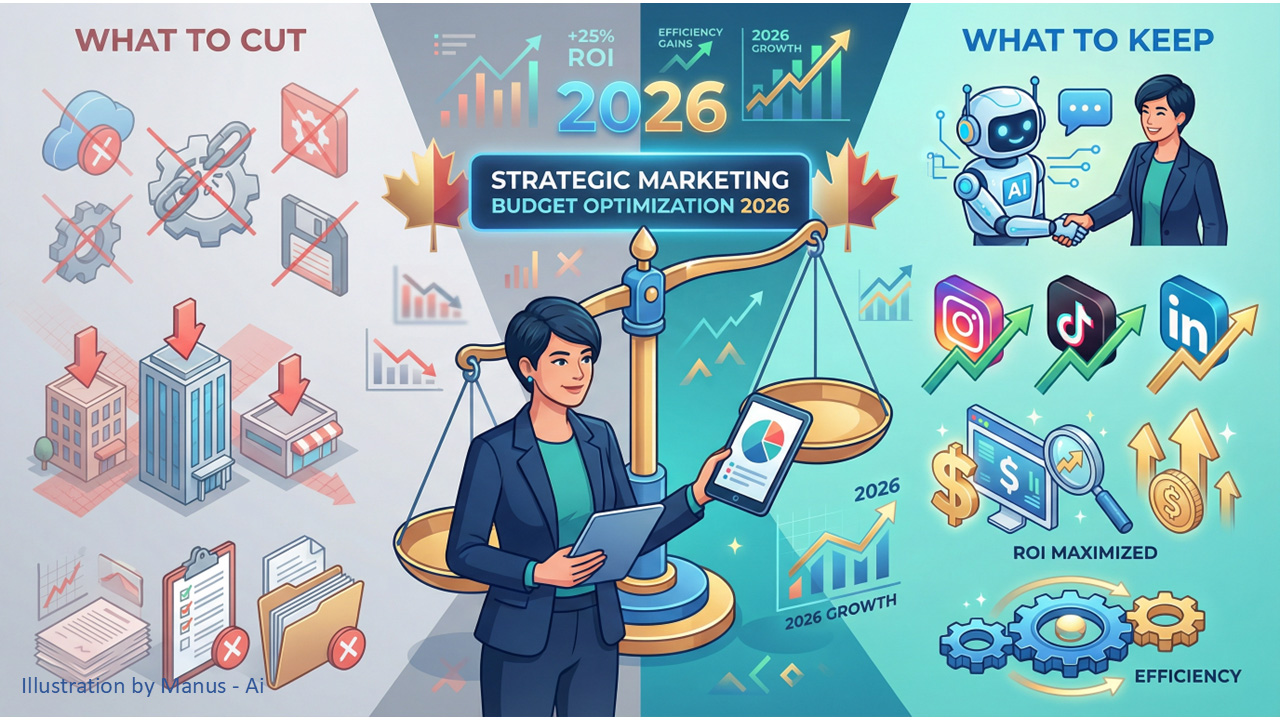
With economic uncertainty lingering in Canada, marketers are tasked with a difficult balancing act: managing limited budgets while simultaneously driving growth. The rapid evolution of artificial intelligence (Ai) complicates the balancing act, presenting both opportunities for unprecedented efficiency and the risk of falling behind in applications of Ai.
Justify Every Dollar – Not New But a Persistent Force in Marketing
Every line item is under scrutiny, and the ability to demonstrate a clear return on investment (ROI) is paramount. Chief Marketing Officers (CMOs) tend to prioritize ROI as their primary metric for budget allocation, a clear signal of the shift towards a more data-driven and accountable approach to marketing spend.
To meet these demands, marketers must adopt a mindset of zero-based budgeting. Instead of simply adjusting the previous year’s budget, zero-based budgeting requires justifying every expense from scratch. This forces a critical evaluation of all marketing activities, ensuring that every dollar is aligned with strategic priorities and contributes to the bottom line.
Eliminating Waste
Before making a case for new investments, it is important to first demonstrate a commitment to efficiency by eliminating waste. Here are the key areas to consider for waste reduction:
- Redundant Marketing Technology and Manual Processes
Marketing technology, refers to software applications and platforms for creating, managing, and analyzing marketing efforts. Marketing teams in large corporations use numerous separate tools, leading to significant inefficiencies and productivity losses due to context switching. It is time to consolidate martech stacks of apps and platforms. Conduct a thorough audit of existing tools and eliminate those with overlapping functionalities or that are not delivering a clear ROI. Identify manual, repetitive tasks that can be automated. The strategic implementation of Ai can reduce marketing overhead costs, freeing up valuable resources. - Re-evaluating Agency Partnerships
External agency spending is facing significant scrutiny, with allocations dropping. While agencies can provide valuable expertise, it’s crucial to evaluate these partnerships critically. Are your agencies delivering the results you need? Can some of their functions be brought in-house, supported by a leaner, more agile team and the power of Ai? Many companies are finding that they can achieve better results at a lower cost by insourcing strategic functions and using agencies for specialized, project-based work.
What to Keep & Invest In
Eliminating waste is only part of managing limited budgets while simultaneously driving growth. To drive growth, you must also make smart investments in the channels and technologies that will deliver the greatest returns.
- Ai and Automation
Ai is a fundamental component of a modern marketing strategy. From accelerating content creation to personalizing customer experiences and optimizing ad spend, Ai improves efficiency and effectiveness. Ai should be viewed not as a replacement for marketers, but as a collaborator that empowers marketers to do more with less. - Social Search
The way consumers discover and research products is undergoing a fundamental shift. Social media is now the number one search destination for Gen Z, surpassing traditional search engines like Google. This has given rise to the importance of Social Search Engine Optimization (SOSEO). Marketers must invest in creating content that is discoverable on social platforms. - Paid Media and Low-Cost Strategies
Some channels remain as important as ever. Paid media, particularly search and social advertising, continues to be a core driver of leads and revenue. Alongside these paid channels, don’t neglect the power of low-cost strategies like listings management, reputation management, and content marketing. These tactics are particularly important for small and medium-sized businesses looking to stretch their budgets and build a strong foundation for growth.
A Strategic Approach to Your 2026 Budget
Crafting a successful marketing budget for 2026 requires a strategic and data-driven approach. By eliminating waste, making smart investments in high-growth areas, and justifying every dollar with a clear connection to revenue, you can build a budget that not only withstands scrutiny but also fuels sustainable growth for your organization.

Grant Lee, CPM
Trainer, Mentor, and Specialist in Applied Marketing